
Asset and maintenance management has become increasingly complex. This guide provides a practical, end-to-end view of modern asset and maintenance management, the foundational elements organizations need in place, and the technology that empowers it.
Whether organizations are strengthening core maintenance practices or working toward a more integrated operating model, this guide serves as a reference for building more consistent, scalable, and insight-driven asset and maintenance programs.
What Is Asset and Maintenance Management?
Asset and maintenance management is the practice of managing physical assets throughout their lifecycle, from installation and operation to maintenance and replacement.
The objective is to ensure assets perform as expected while balancing maintenance effort, operational risk, and cost. A structured approach allows organizations to apply asset management resources appropriately based on asset role, condition, and operational impact.
A Comprehensive Asset and Maintenance Strategy
A comprehensive asset and maintenance strategy includes:
- Accurate, standardized asset records
- Planned maintenance activities aligned to asset needs
- Defined workflows for technicians and planners
- Visibility into asset performance, downtime, and maintenance costs
- Documentation that supports audits and capital planning
These responsibilities go far beyond managing work orders. As organizations face increasing pressure to control costs, reduce risk, and plan more effectively, software has become essential for connecting asset data, maintenance execution, and long-term planning. When these elements are managed together, maintenance becomes a source of insight that supports broader organizational goals, not just day-to-day operations.
Asset Data: Creating a Reliable Foundation
Asset data provides the foundation for all maintenance and planning decisions. It combines a clear record of what assets exist with ongoing information about how those assets perform over time.
At its core, asset data starts with a well-defined inventory. This establishes the authoritative record of physical assets and ensures maintenance activity is consistently tied to the correct equipment.
What Asset Data Typically Includes
A strong asset data foundation brings together both structural and operational information, such as:
- Asset identifiers, classifications, and hierarchies
- Location and organizational ownership
- Manufacturer, model, and serial details
- Asset status and system relationships
- Maintenance and service history
- Inspection results and condition assessments
- Failure events, corrective actions, and associated labor and parts costs
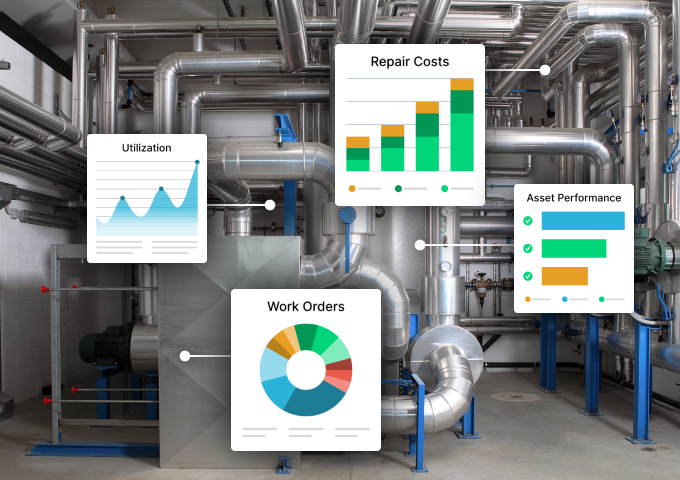
When asset data is incomplete or poorly structured, organizations encounter issues such as duplicate records, missed inspections, inconsistent reporting, and unreliable performance metrics. These gaps make it difficult to align maintenance effort with the actual asset population.
Furthermore, inaccurate asset data makes it difficult to forecast asset replacement decisions, which can lead to a number of downstream consequences, including unplanned downtime. To learn what kind of asset data is critical to successful capital planning, read: How Asset and FCA Data Improves Capital Planning Accuracy.
Maintenance Strategies and Program Coordination
Asset data provides the context needed to decide how each asset should be maintained. Information such as asset role, condition, age, and maintenance history helps determine whether an asset can be managed reactively, requires planned maintenance, or should follow a more reliability-focused approach.
Types of Maintenance Strategies
Most organizations apply multiple maintenance strategies across their portfolios. Low-risk assets may be maintained reactively, while critical systems require structured preventive programs. Assets with higher operational impact often benefit from more advanced approaches, such as preventive, predictive, or condition-based maintenance, where effort is aligned more closely to risk and performance.

As maintenance programs expand to include multiple strategies, coordination becomes essential. Without a consistent way to manage these approaches together, maintenance effort becomes uneven and difficult to oversee.
Coordinated program management enables organizations to:
- Apply appropriate levels of effort across asset classes
- Maintain consistent execution and reporting
- Evaluate performance across maintenance approaches
- Adjust strategies using asset performance and cost data
Managing multiple strategies within a single system helps reduce fragmentation and improve consistency. Accurate asset data determines which strategy applies to each asset, while centralized scheduling ensures maintenance activities are planned, triggered, and tracked consistently. Automated notifications help ensure work is completed on time, and completed work feeds back into asset records to support ongoing evaluation and replacement decisions.
Together, data, scheduling, and system-based coordination improve oversight and support more consistent maintenance outcomes over time.
Work Orders and Maintenance Execution
Work orders are the link between maintenance planning and what actually happens in the field. Every completed work order updates the organization’s understanding of asset condition, maintenance history, and cost, making execution quality just as important as planning.
A structured work order process ensures that maintenance activity is captured consistently and tied back to the correct asset. This includes documenting:
- The work performed
- The reason the work was required
- Labor time and materials used
- Observations about asset condition after completion
When this information is captured the same way every time, it becomes possible to compare work across assets, locations, and time periods. Over time, these patterns help organizations identify recurring issues, evaluate maintenance effectiveness, and focus effort where it has the greatest impact. Many teams formalize this approach by following established best practices for work order management, which help create consistency without slowing execution.
Supporting Consistent Execution
Technicians are more likely to capture accurate information when workflows are clear and easy to follow. Standardized forms, required fields, and mobile access reduce guesswork and limit reliance on free-text notes that are difficult to analyze later.
Modern maintenance platforms support consistent execution by:
- Linking work orders directly to asset records
- Applying standardized workflows and checklists
- Triggering notifications and reminders for scheduled work
- Updating asset histories automatically when work is completed
Over time, well-managed work orders help keep asset data current, reveal recurring issues, and support more accurate analysis. This feedback loop allows organizations to refine maintenance strategies, improve planning, and reduce unnecessary reactive work.
Compliance, Risk, and Audit Readiness
Compliance requirements vary widely across industries, but they share a common challenge: maintenance activity must be performed on time, documented accurately, and easy to verify. Healthcare, life sciences, manufacturing, and public-sector organizations often operate under multiple overlapping regulations, each with its own inspection schedules, documentation standards, and reporting expectations.
As portfolios grow and assets become more specialized, compliance becomes harder to manage with disconnected systems or manual processes. When maintenance records are scattered across spreadsheets, emails, and paper forms, demonstrating compliance requires significant effort and introduces unnecessary risk.
Choosing Compliance-Specialized Software
A software system-driven approach to maintenance compliance helps organizations:
- Schedule required inspections, testing, and certifications
- Maintain complete, consistent maintenance documentation
- Verify asset service history and inspection outcomes
- Generate audit reports quickly and with confidence
Embedding compliance requirements directly into maintenance workflows reduces reliance on manual tracking and last-minute preparation. Over time, this approach improves audit readiness, lowers administrative overhead, and reduces the risk of missed or incomplete maintenance activities.
From CMMS to IWMS: Maintenance Technology Explained
Early maintenance systems were designed primarily to track tasks and schedules. As asset portfolios grew and maintenance costs became more visible, organizations began looking for tools that could support asset lifecycle management and cost tracking alongside daily execution.
Over time, maintenance responsibilities expanded beyond the maintenance team itself. Decisions about how assets were maintained began to affect capital planning, space utilization, real estate strategy, and financial forecasting. This shift exposed the limits of systems that managed maintenance in isolation—without visibility into how buildings were used, how projects were funded, or how assets fit into long-term portfolio plans.
Understanding the Different Types of Maintenance Software
- CMMS platforms are typically focused on work execution. They support scheduling, work orders, and preventive maintenance, but often operate separately from other operational and planning systems.
- EAM systems broaden this scope by managing asset lifecycles and tracking maintenance costs over time. While they provide deeper insight into asset performance, they may still limit visibility into how maintenance decisions connect to space planning, capital investments, or real estate considerations.
- IWMS platforms take a broader approach by integrating maintenance with space management, capital planning, and real estate data. By sharing a common data model, these systems allow maintenance activity to be viewed in the context of how buildings and assets are used, funded, and planned over time.
How Maintenance Software Can Evolve as Organizations Grow
When maintenance data is separated from space, capital, and real estate information, aligning daily work with long-term goals becomes difficult. Decisions about repairs, replacements, or investments often rely on manual analysis and assumptions rather than clear, consistent data.
At the same time, not every organization is ready to adopt a fully integrated IWMS all at once. Many begin by focusing on strengthening their asset and maintenance foundation by improving data quality, standardizing workflows, and gaining visibility into maintenance performance.
An IWMS such as Nuvolo Connected Workplace supports this progression. Our Asset & Maintenance product can be deployed as a standalone solution, allowing organizations to establish strong maintenance and asset management practices first. As needs evolve, additional capabilities—such as capital planning, space management, or real estate—can be added within the same platform, using the same data model.
This modular approach allows organizations to meet current needs without overcommitting, while ensuring they are positioned to scale and connect operations over time.
Emerging Technologies, Predictive Analytics, and AI
Emerging technologies are changing how organizations approach maintenance, but their impact depends on how well they build on existing data and processes. Tools like predictive analytics, AI, and smart building technologies are most effective when they extend a strong maintenance foundation rather than attempt to replace it.
These technologies help organizations get more value from maintenance data by identifying patterns, improving prioritization, and enabling more forward-looking decisions.
Some of the most impactful technologies in asset and maintenance management today include:
Artificial Intelligence and Machine Learning
AI analyzes historical asset performance, work orders, and condition trends to surface patterns that are difficult to detect manually. It can help prioritize work based on risk, forecast likely failures, and suggest where preventive action will have the greatest impact. These capabilities are explored in more detail in Everything You Need to Know About AI for Facilities Management, which outlines how AI can be applied responsibly and effectively across facilities operations.

Smart Building Sensors and IoT
Sensors provide real-time visibility into equipment condition, utilization, and environmental performance. When integrated with maintenance systems, this data supports condition-based maintenance, improves space utilization, and informs energy performance decisions. A real-world example can be seen in Creating Smarter, More Efficient Spaces with Sensor Data, which highlights how a customer is using sensor data to gain better insight and drive efficiency across their facilities. Additional context on the role of smart buildings in performance and sustainability is covered in Smart Buildings: Reimagine Your Workplace for Peak Performance and Sustainability.
Predictive Analytics
Predictive analytics uses historical maintenance and asset performance data to anticipate likely failures and trends. When paired with AI, these models improve over time by learning from new work orders and condition data, allowing predictions and recommendations to become more accurate and responsive as asset behavior changes. This enables organizations to move beyond fixed schedules and apply maintenance effort based on actual risk and performance.
What Enables These Technologies to Deliver Value
Emerging technologies depend on fundamentals to be effective. Predictive analytics and AI require accurate asset data, consistent work order history, and systems that connect maintenance activity to asset performance.
When these foundations are in place, emerging technologies act as force multipliers. They help organizations reduce unplanned downtime, focus resources where they matter most, and improve alignment between maintenance execution and broader operational goals. Without them, insights are harder to trust and more difficult to act on.
Used thoughtfully, these technologies help maintenance programs become more proactive and adaptable—setting the stage for the operational insight explored in the next section.
Bringing It All Together
Asset and maintenance management is built on more than individual tools or processes. It depends on accurate asset data, coordinated maintenance strategies, consistent execution, and systems that connect daily work to long-term planning.
As operational complexity increases, disconnected systems and manual processes become harder to sustain. Software plays a critical role in making maintenance activity visible, measurable, and aligned with broader goals related to reliability, cost control, compliance, space efficiency, and sustainability.
When these elements work together, asset and maintenance management moves beyond day-to-day execution and becomes a source of insight that supports better decisions across the organization.
Learn how Nuvolo helps organizations connect asset data, maintenance execution, and long-term planning in a single platform—supporting maintenance programs at every stage of maturity by scheduling a demo.
Learn from our industry experts and get step-by-step, practical guidance to help you solve your top facilities challenges with The Ultimate Facilities Playbook.
Download GuideLearn from our industry experts and get step-by-step, practical guidance to help you solve your top facilities challenges with The Ultimate Facilities Playbook.
Download Guide