Facilities and asset management leaders are under increasing pressure to reduce downtime, improve technician productivity, and optimize maintenance across complex building portfolios. As a result, many organizations are investing in modern computerized maintenance management systems (CMMS) and maintenance management software. In fact, 83% of organizations plan to increase CMMS spending, reflecting the growing urgency to modernize maintenance operations.
But choosing the right platform requires more than comparing feature lists.
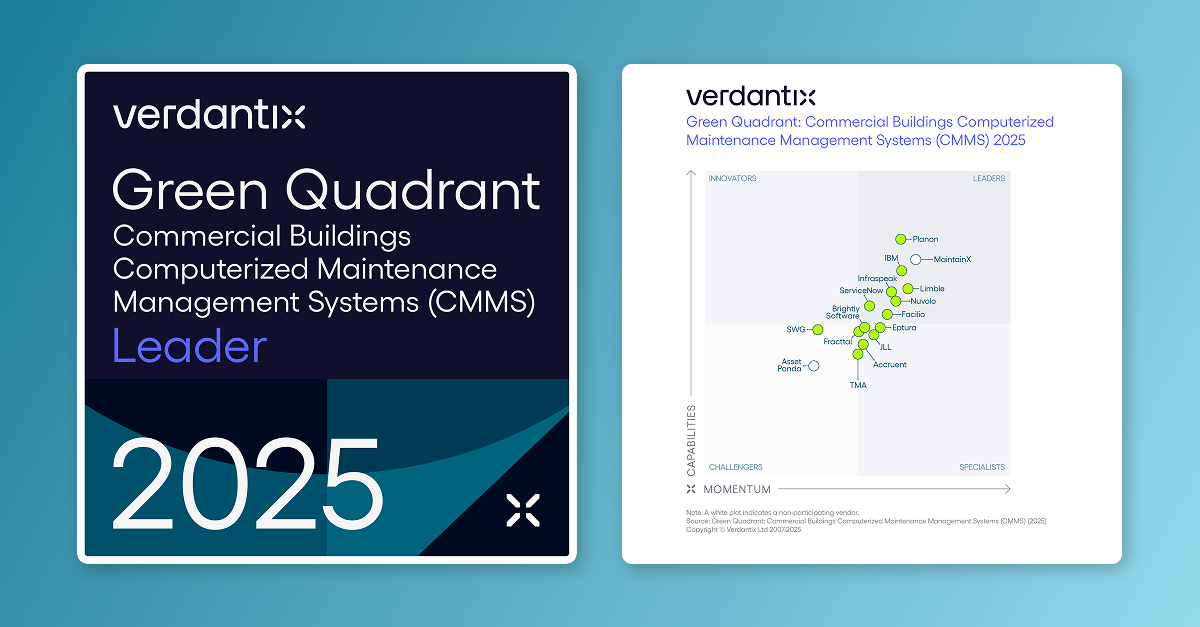
Analyst research from Verdantix shows that leading CMMS systems now differentiate themselves through integration capabilities, mobile usability, analytics, and support for predictive maintenance strategies.
Guided by insights from this report, organizations should consider the following questions before selecting a maintenance management platform to ensure it supports both day-to-day operations and long-term asset strategy.
Key Questions to Evaluate a CMMS
1. How well does the CMMS integrate with our existing systems?
Maintenance operations rarely operate in isolation. Facilities teams increasingly rely on data from IT, building systems, enterprise software, and connected devices to understand asset performance and coordinate service workflows.
A modern CMMS should act as a central hub that connects maintenance operations with the broader technology ecosystem.
Look for integrations with systems such as:
- IT service management platforms (ITSM)
- Building management systems (BMS)
- ERP and financial systems
2. What AI and machine learning capabilities does the platform offer?
Artificial intelligence is becoming an important component of modern maintenance programs. Capabilities such as predictive maintenance, automated work order prioritization, and asset performance analytics can help organizations identify patterns in equipment behavior, anticipate failures, and recommend more effective maintenance strategies.
However, these capabilities depend on high-quality asset and maintenance data. Without consistent, well-structured data, AI tools cannot generate reliable insights.
Look for platforms that support:
- Standardized asset hierarchies and structured asset records
- Complete and consistent maintenance histories across work orders
- Analytics that transform maintenance data into predictive insights
3. How intuitive is the user experience for technicians and facility teams?
Technician adoption is one of the most important success factors for any CMMS implementation. If the system is difficult to navigate, maintenance teams may avoid using it or record incomplete information.
Platforms designed with technicians in mind improve both productivity and data quality.
Look for systems that provide:
- Simple and intuitive user interfaces
- Mobile-first design for field technicians
- Automation that reduces manual steps
- Seamless offline support that auto-syncs data when a signal is restored
4. Does the vendor demonstrate expertise in our industry?
Maintenance requirements vary widely across industries such as healthcare, life sciences, manufacturing, and commercial real estate. Vendors with deep industry experience can better support regulatory requirements and operational workflows.
Industry expertise often shapes how platforms are designed and implemented.
Look for vendors that demonstrate:
- Experience supporting organizations in your industry
- Customer references from similar organizations
- Industry knowledge embedded in product capabilities
5. Can the platform scale from single sites to large portfolios?
Many organizations initially implement a CMMS to manage maintenance at a single facility. As portfolios grow, maintenance programs often expand across multiple sites and asset types.
The platform should support this growth without requiring major system changes.
Look for capabilities that support:
- Multi-site maintenance operations
- Standardized workflows across locations
- Portfolio-wide reporting and visibility
6. How does the system support regulatory compliance and risk mitigation?
Many industries require strict maintenance documentation to meet regulatory and safety requirements. Maintenance systems play a key role in ensuring activities are properly tracked and auditable.
The platform should provide tools that help organizations maintain compliance while reducing operational risk.
Look for features such as:
- Complete maintenance and work order audit trails
- Compliance reporting and inspection tracking
- Risk monitoring for critical assets
7. How easily can workflows and processes be customized?
Maintenance operations often require unique workflows based on asset types, service levels, or operational policies. A flexible CMMS should allow organizations to configure workflows without relying heavily on developers.
Customization helps ensure the platform aligns with real operational processes.
Look for platforms that allow teams to configure:
- Workflows and approval processes
- Forms and work order templates
- Dashboards and reporting views
8. What cybersecurity, data privacy, and uptime protections are in place?
Maintenance platforms store critical operational data about assets, facilities, and service operations. Ensuring this data remains secure and accessible is essential for operational continuity.
Organizations should evaluate the provider’s security architecture, data protections, and system reliability commitments.
Look for assurances such as:
- Enterprise-grade cybersecurity protections
- Role-based data access controls
- Strong uptime and availability guarantees
9. How does the CMMS support sustainability and energy initiatives?
Facilities teams increasingly contribute to organizational sustainability goals. Maintenance platforms can help support these initiatives by providing insights into asset performance and resource usage.
A modern CMMS should connect maintenance activity with broader sustainability objectives.
Look for capabilities such as:
- Monitoring of asset efficiency and performance
- Tracking of lifecycle costs and equipment utilization
- Data that supports sustainability and energy reporting
10. What onboarding, training, and customer success resources are available?
Implementing a maintenance platform often requires organizational change. Teams must learn new workflows, structure asset data, and adopt new processes.
Strong onboarding and customer success support help organizations achieve value more quickly.
Look for support such as:
- Structured onboarding and implementation guidance
- Training for technicians and system administrators
- Ongoing customer success and best-practice resources
Download the Full Report
Want a deeper look at what sets the leading CMMS maintenance software apart? Download the full Verdantix report to explore the key capabilities, trends, and evaluation criteria shaping the future of maintenance management.